
A clear window can make a bakery box more persuasive because customers can see the product before opening it. But the window is also a functional part of the package. Its material, size, placement, and attachment method affect food protection, box strength, stacking, and cost.
This guide explains how to choose a window for custom bakery packaging without over-specifying the box or creating avoidable production problems.
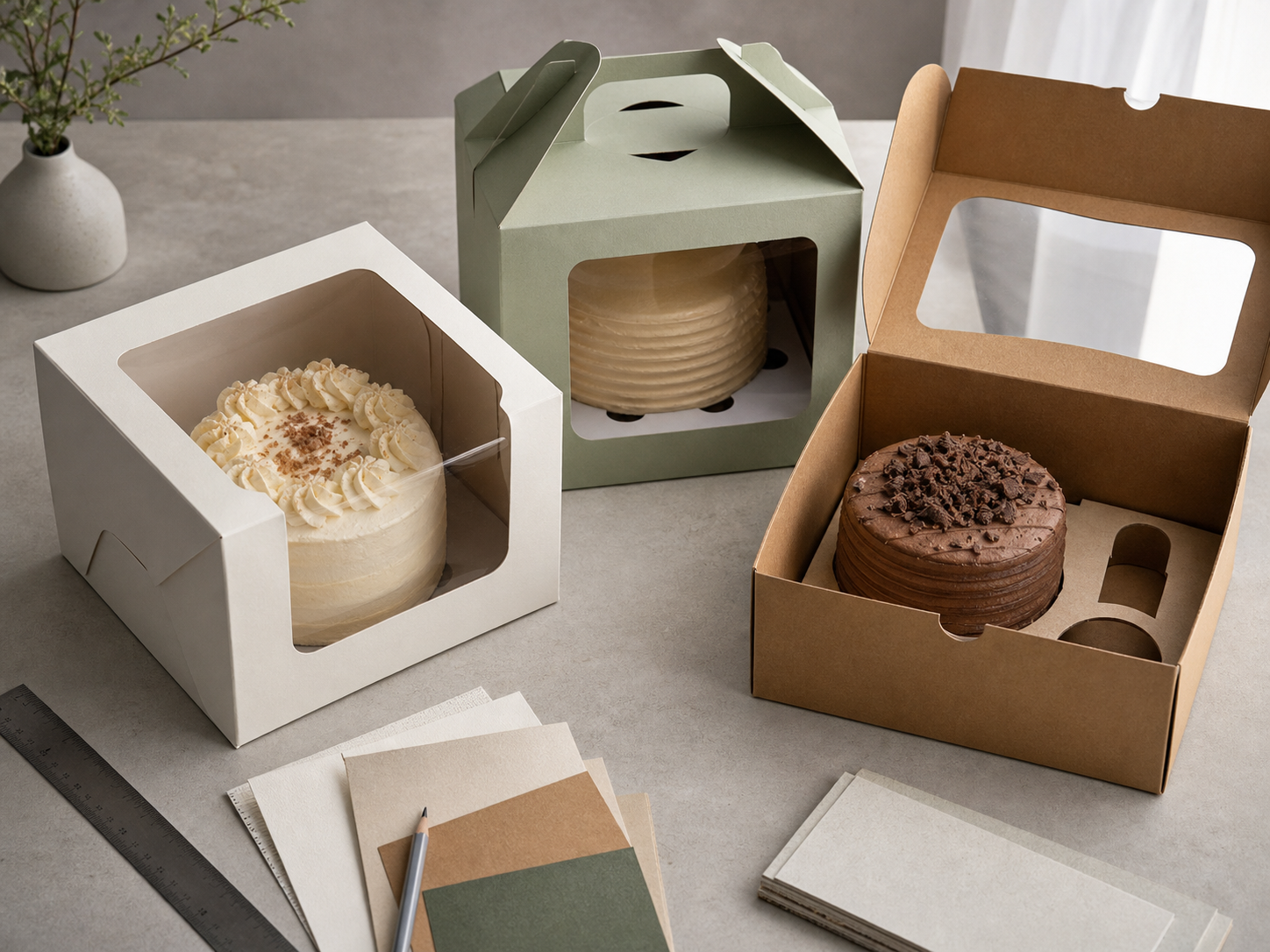
Start with the product, not the window material
Before comparing films, define what the box must contain and how it will be used. A window that works for dry cookies may not be suitable for a warm cake, a cream-filled pastry, or a product that releases oil.
Send your packaging supplier these details:
- The food type and whether it touches the window
- Product temperature when packed
- Expected shelf time inside the box
- Whether the product releases grease or moisture
- Box dimensions and product clearance
- How boxes will be stacked, stored, and transported
- Whether the window must be recyclable or removable
If you are preparing a quotation request, use our custom packaging inquiry checklist to organize the information.
Common window material options for bakery boxes
PET film
PET is widely used for clear packaging windows because it offers good transparency and stiffness. It can be a practical choice when the buyer wants a crisp display window that stays relatively flat during handling.
Ask the supplier whether the proposed PET grade is suitable for the intended food-use scenario. “PET” alone is not a complete specification; thickness, recycled content, coatings, and local compliance requirements can differ.
PP film
PP film can be useful when flexibility and moisture resistance matter. Depending on the grade and construction, it may behave differently from PET during converting and packing. Buyers should evaluate a physical sample rather than choosing only from a material name on a quotation.
Cellulose-based transparent film
Some buyers consider cellulose-based films when they want a renewable-material story. However, clarity, moisture response, sealing or gluing behavior, availability, and price can vary. Confirm the exact grade and test it with the actual food and storage conditions before committing to a production order.
No-film die-cut opening
An uncovered opening removes the plastic window, but it also reduces protection from dust, handling, and moisture. It is usually best for products that are already wrapped or for very short, controlled retail use. The opening must also be designed so it does not weaken the box.
How to compare window materials in a sample test
A useful test should reproduce the real packing process. Place the actual bakery product in the proposed box, then check it immediately and again after the normal holding period.
- Clarity: Does the product remain easy to see under retail lighting?
- Condensation: Does fog form when warm or moist food is packed?
- Grease appearance: Do fingerprints or food oils make the window look untidy?
- Attachment: Does the film lift at corners or separate when the box flexes?
- Odor: Is there any unexpected smell from the complete package?
- Stacking: Does the window or surrounding paperboard deform under normal load?
Do not treat a room-temperature empty-box sample as a complete performance test. The food, packing temperature, transport time, and storage environment all influence the result.
Window size and position matter as much as material
A larger window can improve product visibility, but it removes paperboard from the panel. That may reduce stiffness, especially near folds, locking tabs, or carrying points. A smaller, well-positioned window often gives enough visibility while preserving structural support.
Keep the cutout away from critical creases and leave a consistent paperboard border around it. For tall cakes or delicate decorations, make sure the film cannot bow inward and touch the product. The same principle applies when choosing the overall box structure; our guide to custom cake boxes for bakery brands covers size, board, and closure decisions.
Food-contact and sustainability questions to ask
“Food safe” should be connected to a specific material, supplier document, intended use, and market. Ask for documentation relevant to your product and destination rather than relying on a generic claim. If the food could touch the window, state that clearly during the inquiry.
For a broader packaging review, see our guide to food-safe bakery packaging.
Sustainability also requires more than naming a material. A paper box with a bonded film window may be harder to separate in some recycling systems. Consider whether the window can be removed easily, whether a smaller opening would work, and what local waste guidance says. Avoid making broad environmental claims unless you have evidence for the exact finished package.
What affects the price of a window bakery box?
The window film is only one cost factor. Price can also change with cutout size, film thickness, attachment area, box dimensions, board grade, print coverage, finishing, order quantity, packing method, and quality-control requirements.
To compare quotations fairly, ask every supplier to quote the same specification. Request a blank structural sample first when fit is the main risk, then approve a printed production sample if color and finish are important.
A practical buyer checklist
- Define the food, packing temperature, shelf time, and transport conditions.
- Decide how much of the product customers need to see.
- Ask for the exact window material and thickness.
- Confirm relevant food-use documentation for the target market.
- Test the complete box with the actual product.
- Check clarity, condensation, grease, adhesion, and stacking.
- Approve the final structure and written specification before mass production.
Final recommendation
There is no single best window material for every bakery box. The right choice is the one that shows the product clearly, remains stable during real use, meets the relevant requirements, and fits the buyer’s cost and disposal priorities. Begin with the product conditions, compare physical samples, and document the approved material and construction in the purchase specification.
Need help evaluating a window box structure? Review our product gallery for packaging formats, or contact the packaging team with your product dimensions and packing conditions.